What changed when the drain stopped working?
If water has returned to a spot that previously drained, describe when the change began. A recent landscaping project, driveway work, soil settlement or an unusually heavy storm may provide context. The original system may also have been undersized or may never have had an effective outlet.
Visible inlets and outlets can help identify the system type. French drains collect water through perforated pipe and surrounding stone, while catch basins and downspout lines often use solid pipe to carry water from one point to another. The appropriate inspection and repair method depends on that difference.
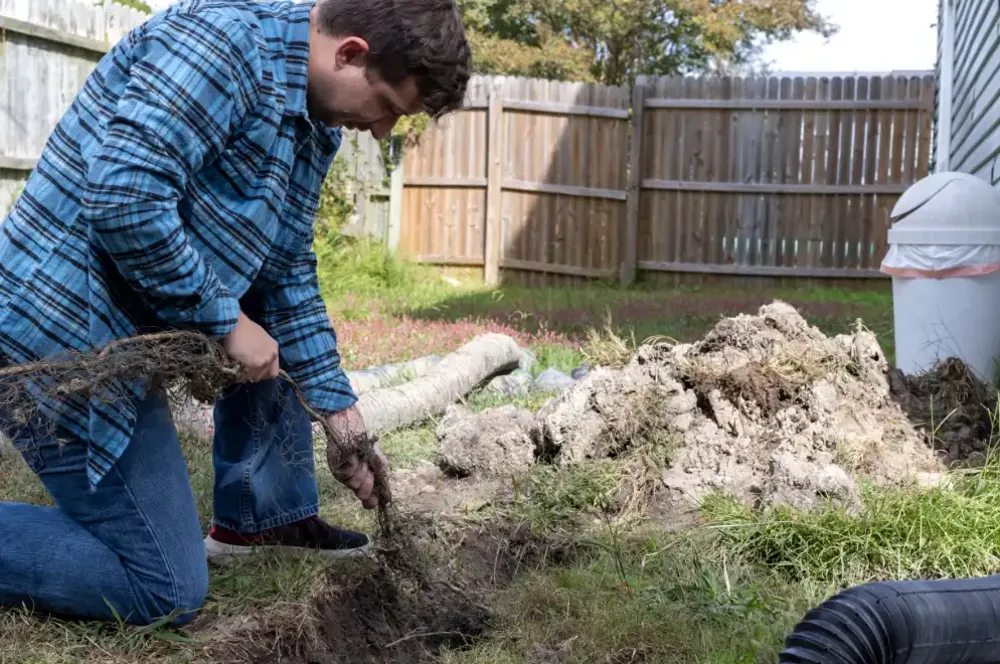
Common places an assessment may focus
Blocked inlets or outlets
Leaves, soil and other debris may restrict a visible opening. An outlet may also be buried, damaged or submerged in standing water. Restoring flow at one point only helps if the downstream destination can receive the water.
Damaged or disconnected pipe
Settlement, roots or work above a line may crush, shift or separate pipe. A localized damaged section may be replaceable. Access, pipe type and the condition of the rest of the line influence whether a repair is practical.
Sediment in the pipe or stone
Fine soil can reduce a French drain’s ability to collect water. Clearing a pipe will not necessarily restore stone that is clogged with sediment. Ask whether the issue affects the conveyance pipe, the surrounding collection trench or both.
Slope or discharge problems
A line with poor fall, a low section that holds water or no suitable outlet may need redesign. Repeated clearing does not resolve an underlying layout problem. A proposed repair should explain how it changes the flow, not just how it removes a blockage.
Can a camera inspection or cleaning help?
A camera may help assess an accessible pipe, depending on its size, material and condition. It cannot inspect the permeability of all the surrounding drainage stone. Cleaning also needs to suit the pipe and the system; aggressive methods can be inappropriate for fragile or damaged lines. Ask what the inspection can establish before authorizing work.
Repair or replacement: what should you ask?
- What evidence identifies the failure point?
- Can the repair be limited to one section?
- Does the existing system have a suitable discharge route?
- What problem would remain after the repair?
- What access, excavation and lawn restoration are included?
For planning a new route, see French drain installation. If you are dealing with a household sewer backup rather than yard or foundation drainage, say so immediately when seeking help; those are different systems.