What is happening in your yard?
Standing water is a symptom, not a complete diagnosis. A shallow depression can hold surface runoff. Compacted soil may take water in slowly. A downspout may be discharging too close to the house. Water may also move through the soil from higher ground. These situations do not all need the same drainage system.
When you call about yard drainage in Allentown, describe the affected area and how it behaves. Does water arrive quickly during a storm, or does the ground stay soft for days afterward? Does it happen by a downspout, along a fence, beside the foundation or across the whole yard? These details help frame the next step.
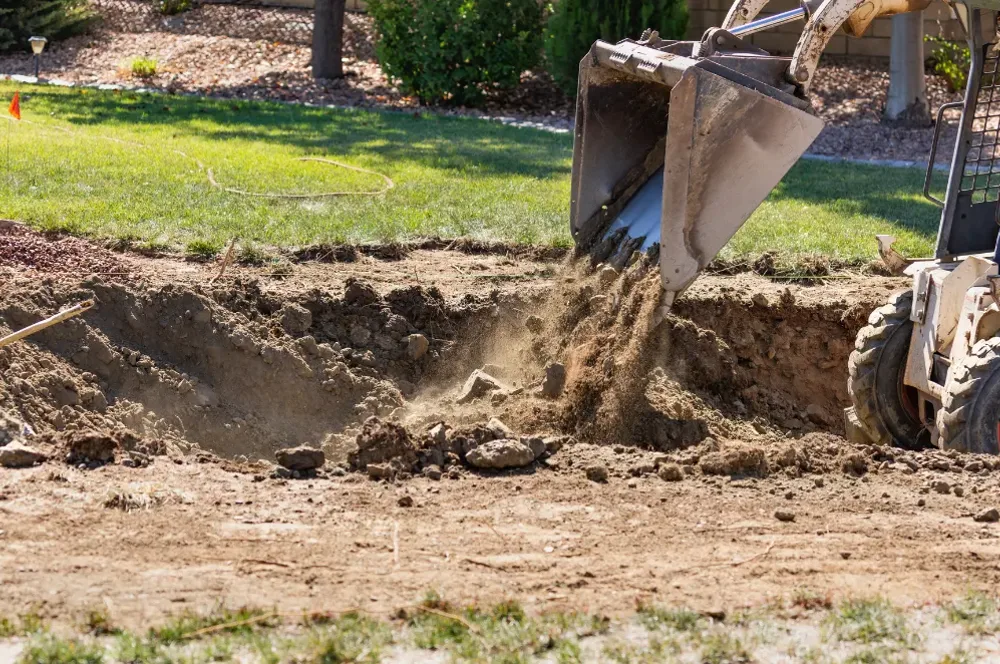
Match the drainage approach to the problem.
French drains for water in the soil
A gravel-filled trench with perforated pipe can collect subsurface water and direct it toward a suitable outlet. A French drain installation plan needs the right location, materials and discharge route; adding pipe without understanding the water source may leave the same wet spot.
Catch basins and channel drains for surface water
A catch basin receives water at a surface inlet and sends it through a drainage line. A channel drain collects runoff along a narrow grate, often near paving. These may suit water moving over the surface, but capacity, slope, debris and outlet conditions still matter.
Grading or a swale to change the flow
Some problems come from the way the ground slopes. Carefully planned grading or a shallow swale may direct runoff away from the problem area. Changing grade around a building requires care so that siding, vents and other vulnerable openings are not buried or exposed to water.
Downspout drainage for roof runoff
When a downspout is concentrating roof water next to the home, its route deserves attention. A solid drain line may carry that collected water to a suitable destination. Avoid assuming roof runoff should empty into a perforated foundation drain; the systems need to be designed together.
What to note before calling
- Where water first appears and how far it spreads.
- Whether the problem occurs during rain, after rain or in dry weather.
- Nearby downspouts, patios, retaining walls and changes in slope.
- Any existing drain inlet, outlet or buried pipe route you know about.
- Access restrictions such as a narrow gate, fence or finished patio.
Photos taken from a safe location after rain can help you describe the pattern. Do not enter moving water, open drainage structures or excavate to look for a pipe. Water flowing during dry weather may also warrant a check for a plumbing or irrigation leak.
A fix should not move the problem next door.
Every drainage plan needs to address discharge. Before work starts, ask about property boundaries, nearby structures and any municipal requirements. Discuss the final surface and restoration costs, too. A workable outlet and a clear written scope matter as much as the drain itself.