Start with the water—not the trench.
A French drain is designed to collect water moving through soil and carry it to an appropriate discharge point. The familiar outdoor system uses perforated pipe surrounded by washed drainage stone, with filtration suited to the soil and the design. It is different from a solid pipe used only to carry downspout water.
Before choosing a route, the person assessing your property should look at where water starts, where it collects and where it can safely go. A low spot in an Allentown backyard, runoff from a paved area and groundwater near a basement wall may need different combinations of drainage and grading.
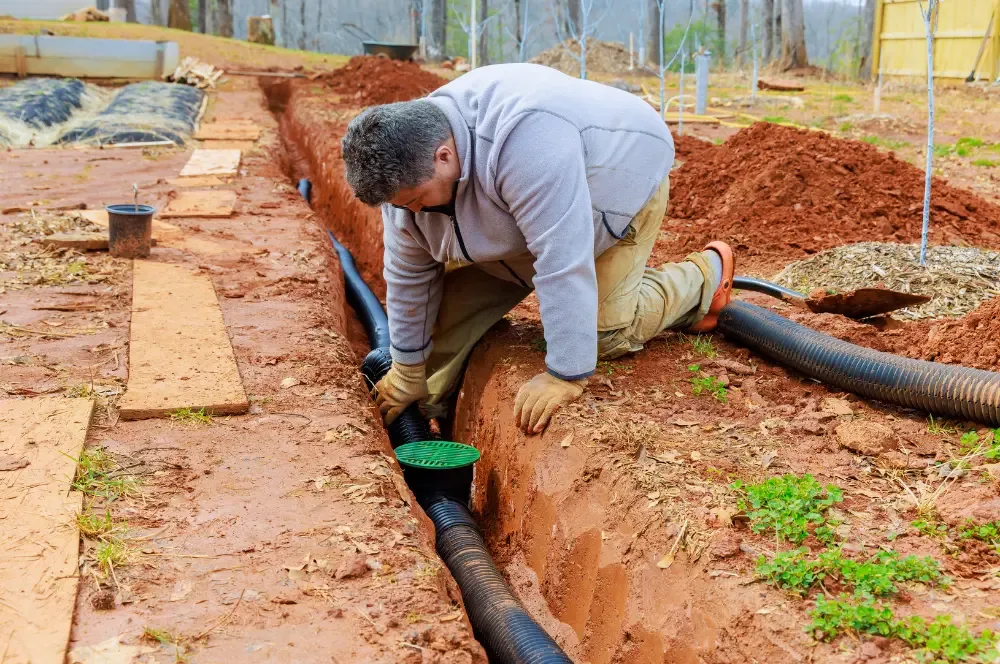
Four parts of a useful installation plan
1. A route that actually intercepts the water
The trench should be positioned to collect the problem water, not simply run along the easiest place to dig. Ask how the proposed route relates to the wet area, the foundation and the direction water moves after rain.
2. Materials that work together
Pipe, stone, filter fabric and cleanout access need to form a system. Fine soil entering the stone can reduce drainage over time. A fabric choice that is suitable for one soil or design is not automatically right for another. Ask why the proposed materials fit your property.
3. A suitable discharge point
A gravity drain needs a workable fall and a suitable outlet. A sump arrangement may be considered when gravity discharge is not practical. Discharge must respect property boundaries and applicable local requirements. Sending the water into another low area or toward a neighboring foundation does not solve the original problem.
4. Access and restoration
Ask where equipment will enter, what plants or paving are affected, how excavated soil is handled and what the finished surface will look like. Seed, sod, topsoil and hardscape restoration should be addressed in the written scope rather than assumed.
Outside drainage and inside drainage are different jobs.
An exterior French drain may intercept groundwater before it reaches a problem area. An interior perimeter drain typically collects water around the inside basement edge and directs it to a sump system. Interior drainage does not eliminate every exterior source of moisture. See the basement drainage guide if water is appearing at your walls or floor.
Before excavation: Underground utilities need to be located, and permits or discharge permissions may apply. In Pennsylvania, start with Pennsylvania 811 and confirm the current requirements with the contractor and your municipality. Do not dig against a foundation or connect to a public system without appropriate review.
Questions to bring to your estimate
- What is the likely water source, and why is a French drain the right approach?
- Where will the drain start, end and discharge?
- What pipe, stone, filtration and cleanouts are included?
- Who handles utility coordination and any required permits?
- What cleanup, surface restoration and written warranty are included?
For help comparing the scope, read what affects a French drain estimate. If an existing system has stopped working, start with drainage repairs rather than assuming the whole system needs replacement.